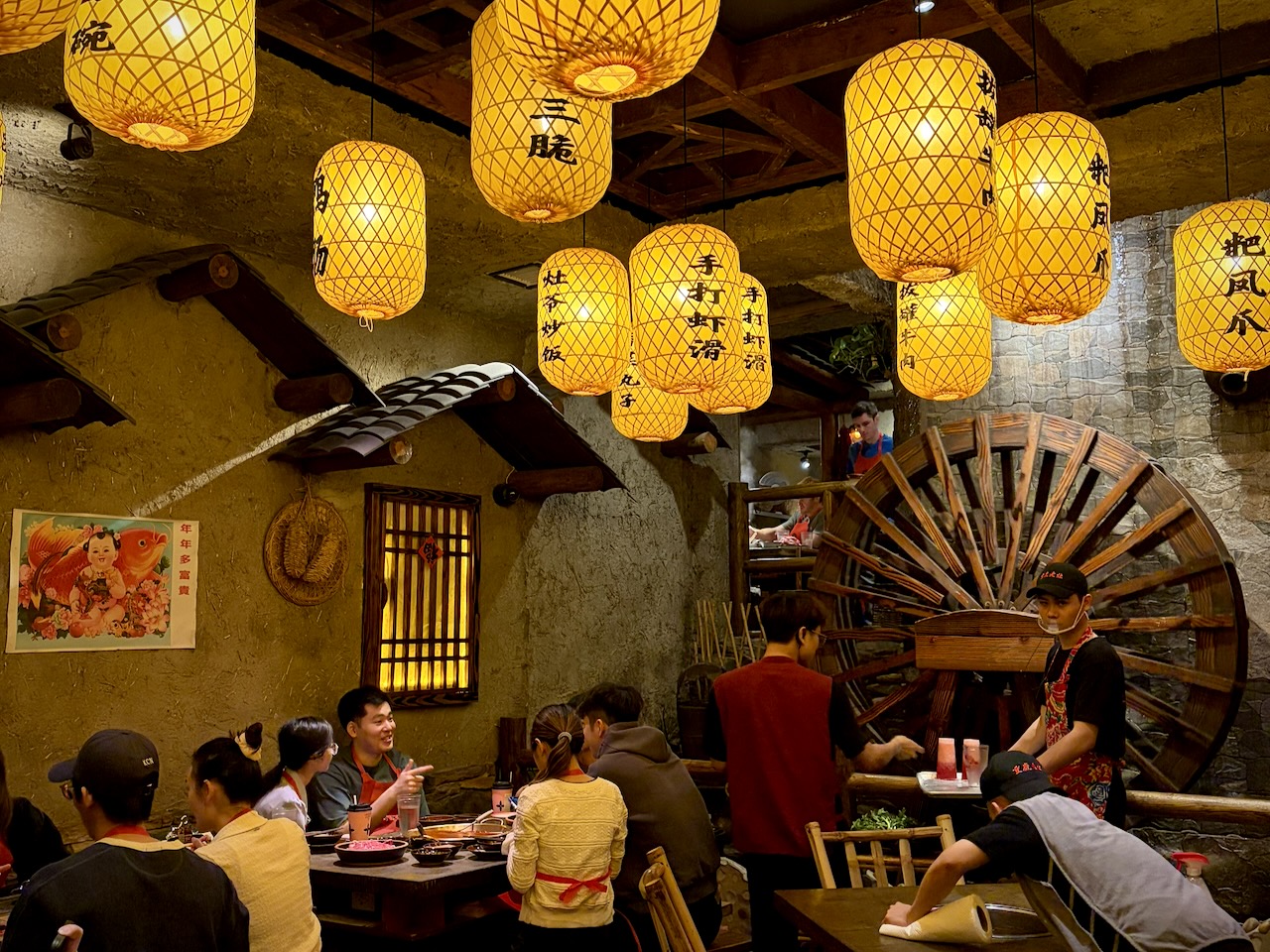
Chong Qing Lao Zao is the kind of room that makes its case before the menu shows up. Doing it in Flushing is part of the case.
Lanterns crowd the ceiling, each hand-lettered with a dish. Hand-beaten shrimp paste. Chicken feet. Three-crisp. Stove-fried rice. A water wheel turns against the back wall. Mud walls, stone tables, bamboo stools, aprons on the staff, a vintage New Year baby poster pinned over brick. None of it is subtle. None of it is accidental. The room commits hard to a memory of Chongqing, and the food has to meet that standard.
It does.
The pot arrives in three compartments. Mala on one wedge, surface packed with dried chiles, beef-tallow oil underneath. Tomato on the second, bright red with ripe chunks floating. Mushroom on the third, clear and aromatic with jujube, goji, enoki, and shiitake. No standard yin-yang compromise. Three lanes, three temperaments.
The mala is the headliner. The depth shows up immediately. Sichuan peppercorn opens the mouth. Then the slow load of chile heat. Then beef tallow holding the whole thing together so the spice lands round instead of sharp. It does not taste diluted for a broader audience. It expects you to keep up.
The tomato broth is the surprise.
Many places treat tomato as the safe option for anyone avoiding heat. Not here. This version cooks bright and full, ripe fruit giving itself to the liquid. Beef rolls dipped through it pick up what the mala cannot give. Acidity. Sweetness. A reset that does not feel like retreat.
The mushroom broth earns equal billing.
Too many split pots treat the non-spicy side as concession. Here it has its own gravity. Sweet, savory, lightly herbal, the kind of broth that gets richer as the meal goes on. By halfway through, it is doing as much work as the mala. You stop rotating for relief and start rotating because each side deserves a turn.
The dipping plate follows the same logic. Sesame and chile on one half, scallion and herbs on the other, seeds through the center. A dry chile-cumin powder waits for skewers. Three lanes of cooking, three lanes of finishing. The table makes immediate sense.
Then the orders land.
Beef rolls fanned tight. Slices of beef fanned around a glass jar of cold milk, petals scattered over the meat. The milk goes into the broth, the broth turns creamy, the beef cooks in that richness. Su rou arrives gold and craggy, seasoned aggressively. Smoked pork sliced thin over cabbage. Daikon. Enoki. Fried tofu waiting to absorb what remains. Tsingtao on the table because little else fits the moment. The plates do not stop arriving. The lanterns do not stop glowing. The pot does not stop bubbling.
There is a whole genre of Chongqing rooms that look excellent on a phone screen and taste like nothing in person. Chong Qing Lao Zao is not one of them. The decor is loud, and the food is louder. The mala carries weight. The tomato and mushroom broths justify their space. The skewers, rolls, and su rou arrive with conviction.
Service can slow when the room is full, and the noise level leaves no room for quiet conversation. Neither matters much once the pot is boiling.
The photos from the night live in Chongqing rules.
Chong Qing Lao Zao is not subtle, and subtlety would ruin it. Three broths. Hand-lettered lanterns. A water wheel. Bamboo stools. Mala in beef tallow. Tomato with fruit. Milky beef. The room and the pot are on the same side of the argument.
The pot does the arguing. The room makes sure you keep listening.