Hojokban was one of those places a friend recommended with enough certainty that ignoring it started feeling stubborn. After hearing about it enough times, then landing a seat after drinks at Barbam, I finally got there in the best possible state for a place like this. Slightly buzzed, properly hungry, and ready for food that needed to hit immediately.
It did.
That is the first thing Hojokban gets right. It understands momentum.
Some restaurants want you to slow down and admire the architecture of the evening. Hojokban wants the table alive. Plates land fast. Flavors hit early. The room stays in motion. It feels loud in the right way, busy in the right way, social without turning sloppy. You are not there to whisper over tweezers and negative space. You are there to eat.
That is what gives the place its shape.
A lot of places trying to do modern Korean food land somewhere awkwardly between comfort and polish. Too cleaned up to feel satisfying. Too self-aware to feel generous. Hojokban avoids that trap. It feels like Korean comfort food turned up, not flattened out for approval. The dishes still have force. They still know what they are trying to do. The whole meal feels built around impact instead of explanation.
The room works off the same logic. It can carry a date, a group dinner, a late-night appetite, or the kind of table that got there after cocktails and is ready to eat with full conviction. Dress up or show up casual, and the place does not care. The energy stays the same. Tight tables. Loud conversation. Fast-moving service. The whole room runs on appetite and momentum.
That kind of room only survives if the food can keep pace.
Here, it does not fall behind for a second.
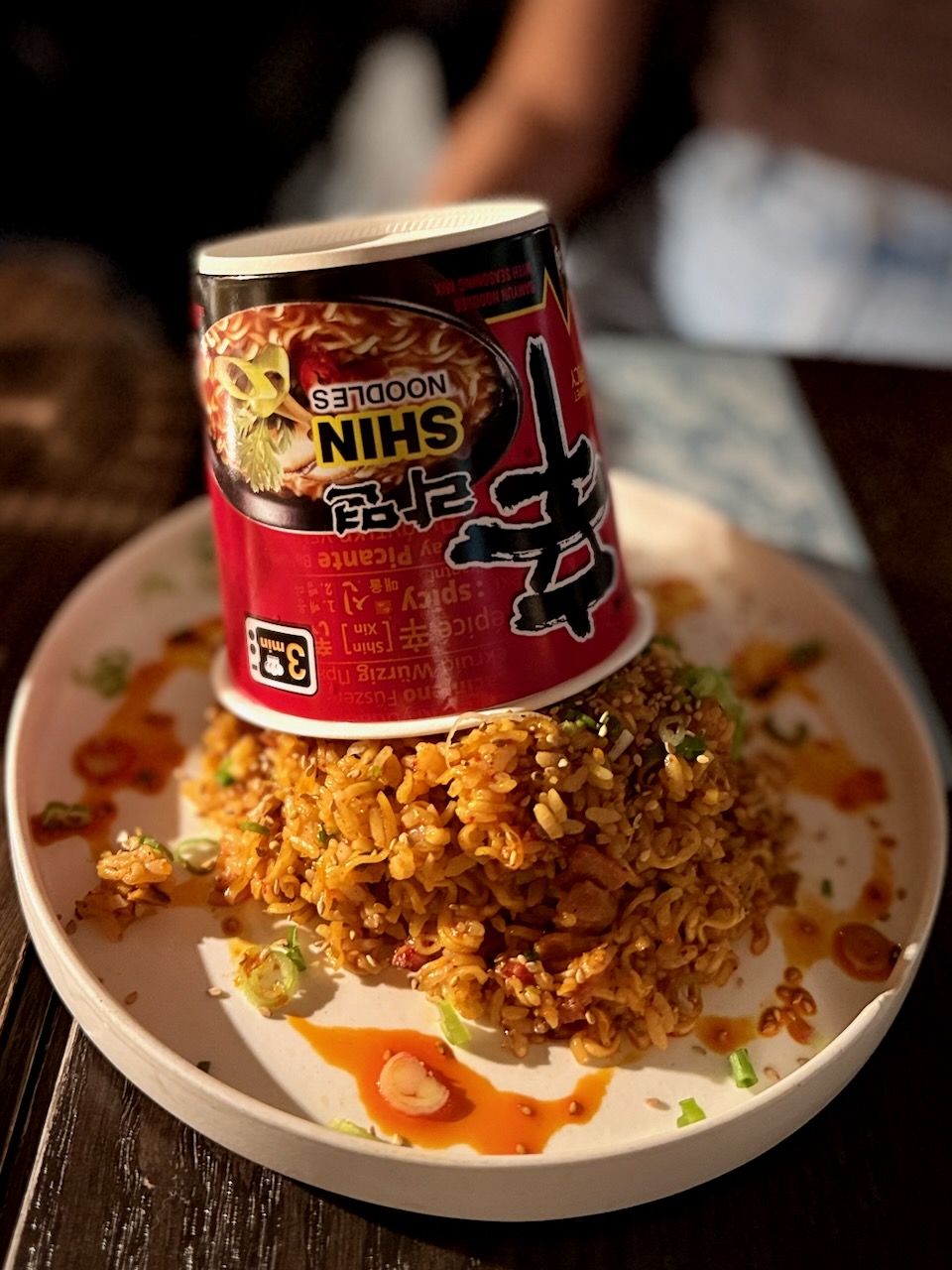
The fried rice is the clearest example. It is one of those dishes that can look like a side move on paper and then take over the table the second it lands. Deep seasoning. Big satisfaction. Enough texture to keep every bite awake. It does not eat flat, and it does not fade halfway through. It keeps your attention in the way the best rice dishes do, by being richer and more complete than they first appear.
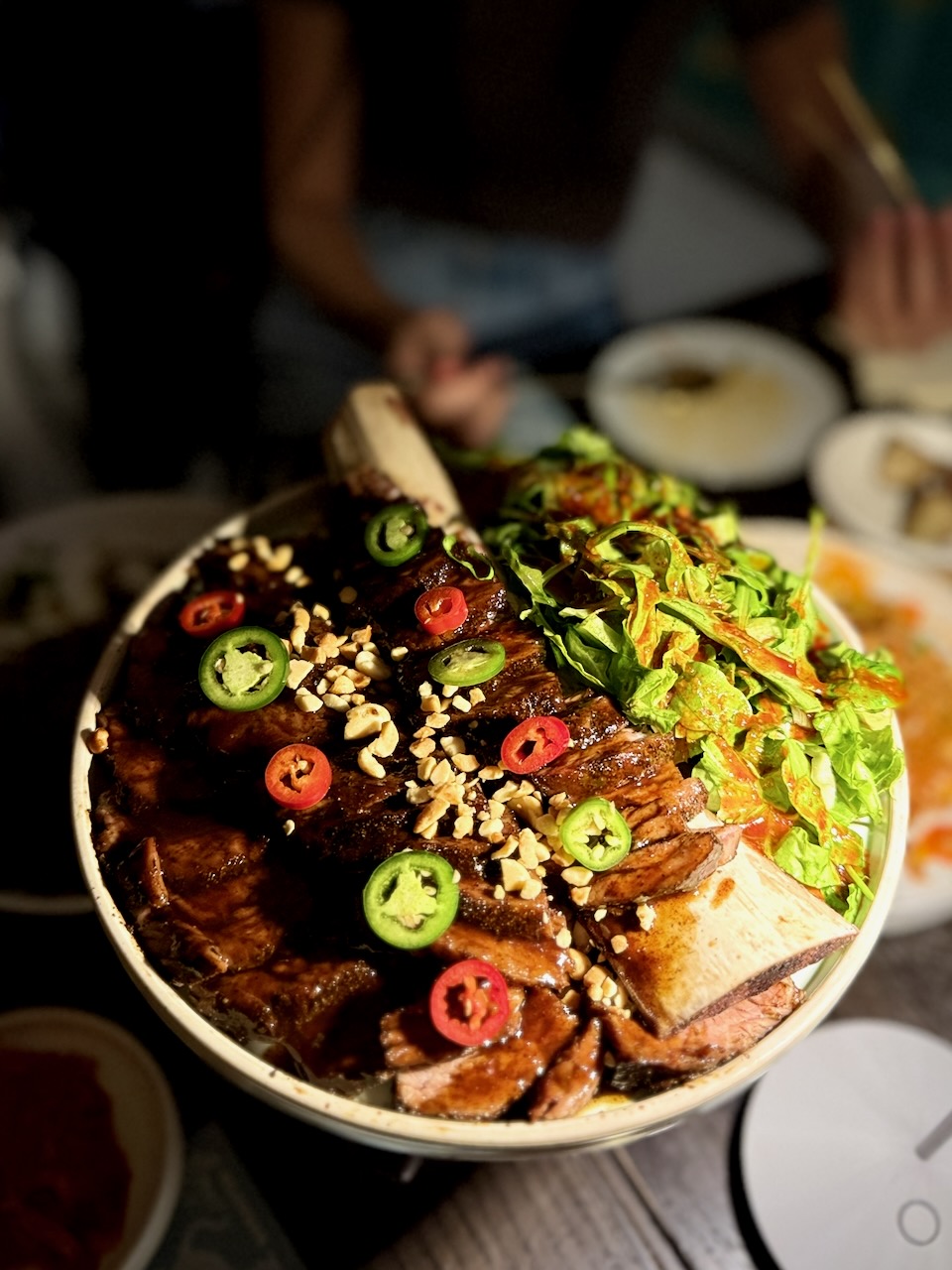
Then there is the galbi, which absolutely knows it is the headliner. Rich, glossy, dialed in, and still clean enough that you keep going back instead of tapping out after two bites. That balance matters. A lot of big meat dishes peak too early. They arrive loud and start tiring you out immediately. This one keeps its shape. It has the weight you want without collapsing under its own richness.
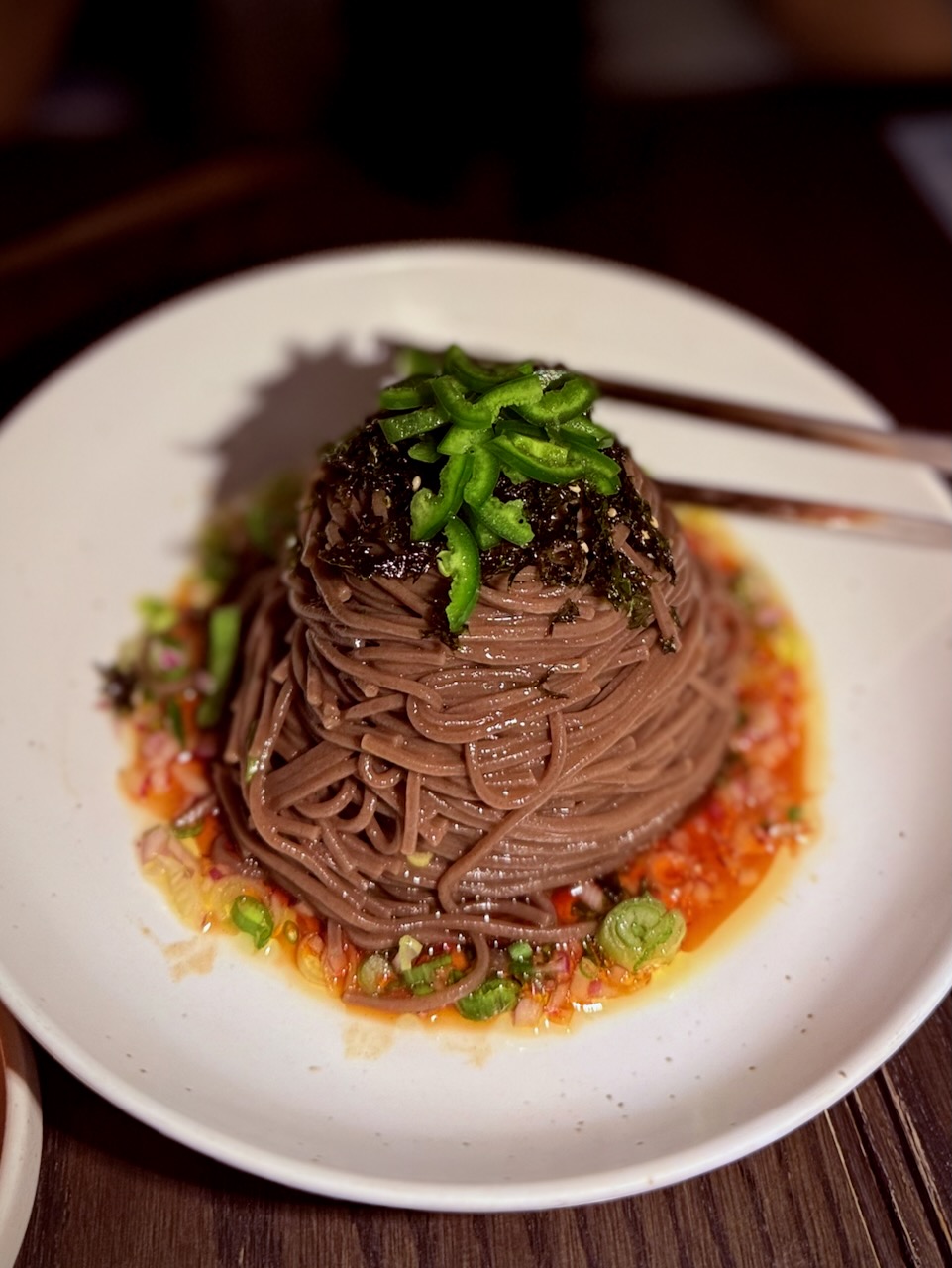
And the noodles are what make the whole meal smarter than it first looks.
That is the reset button. Cold, slippery, sharp, acidic enough to cut through the heavier dishes and wake the table back up. After the fried rice and galbi, the noodles do not feel like a side note. They feel structural. They restore contrast. They bring the meal back into focus. Order all three and the table starts making sense in a more complete way. Heavy, rich, bright, cold, savory, sharp. The meal works because the dishes argue with each other a little.
That is where Hojokban becomes more than a good recommendation.
Good restaurant meals are not always about one perfect plate. Sometimes they are about sequence, contrast, and letting the table build its own logic. Hojokban understands that. It is not trying to hand you a delicate tasting-menu progression. It is giving you dishes with enough character that the table can create its own rhythm.
That is part of why the place feels so satisfying. Nothing is timid. Nothing feels padded out. Nothing tastes like it was toned down for a mixed audience. The food arrives with conviction and trusts you to keep up.
Recommended places can go wrong in familiar ways. They can arrive with too much expectation and not enough substance. They can become more fun to talk about than to eat at. Hojokban holds up because the recommendation cycle actually matches the experience. You get there, the room is alive, the food comes fast, and the dishes hit the way people said they would.
That is rarer than it should be.
It also helps that the place does not overcomplicate its own identity. It is not trying to be too precious for comfort food or too casual for ambition. It lands in a better place than that. Confident, high-energy, and fully aware that people came to eat food that should taste like it means it.
That is exactly what happened.
Hojokban did not disappoint because it never felt like it was trying to perform recommendation-worthy greatness in front of me. It felt locked in. The room knew what it was. The table knew what it needed. The food showed up ready.
That is the whole verdict.
Hojokban is not subtle, and that is the point. It is Korean comfort food with the volume turned up, the contrasts dialed in, and the whole table fully awake.