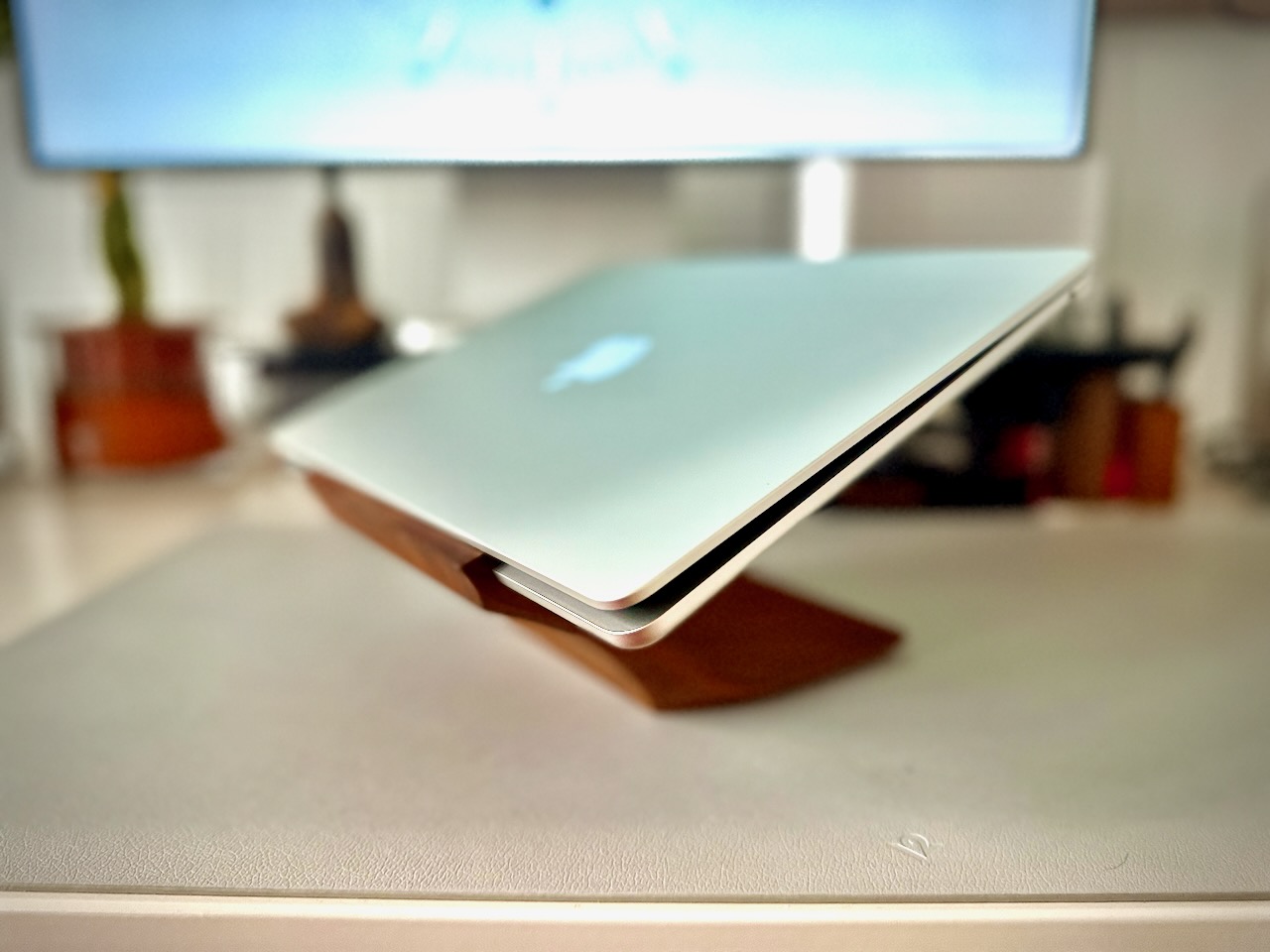
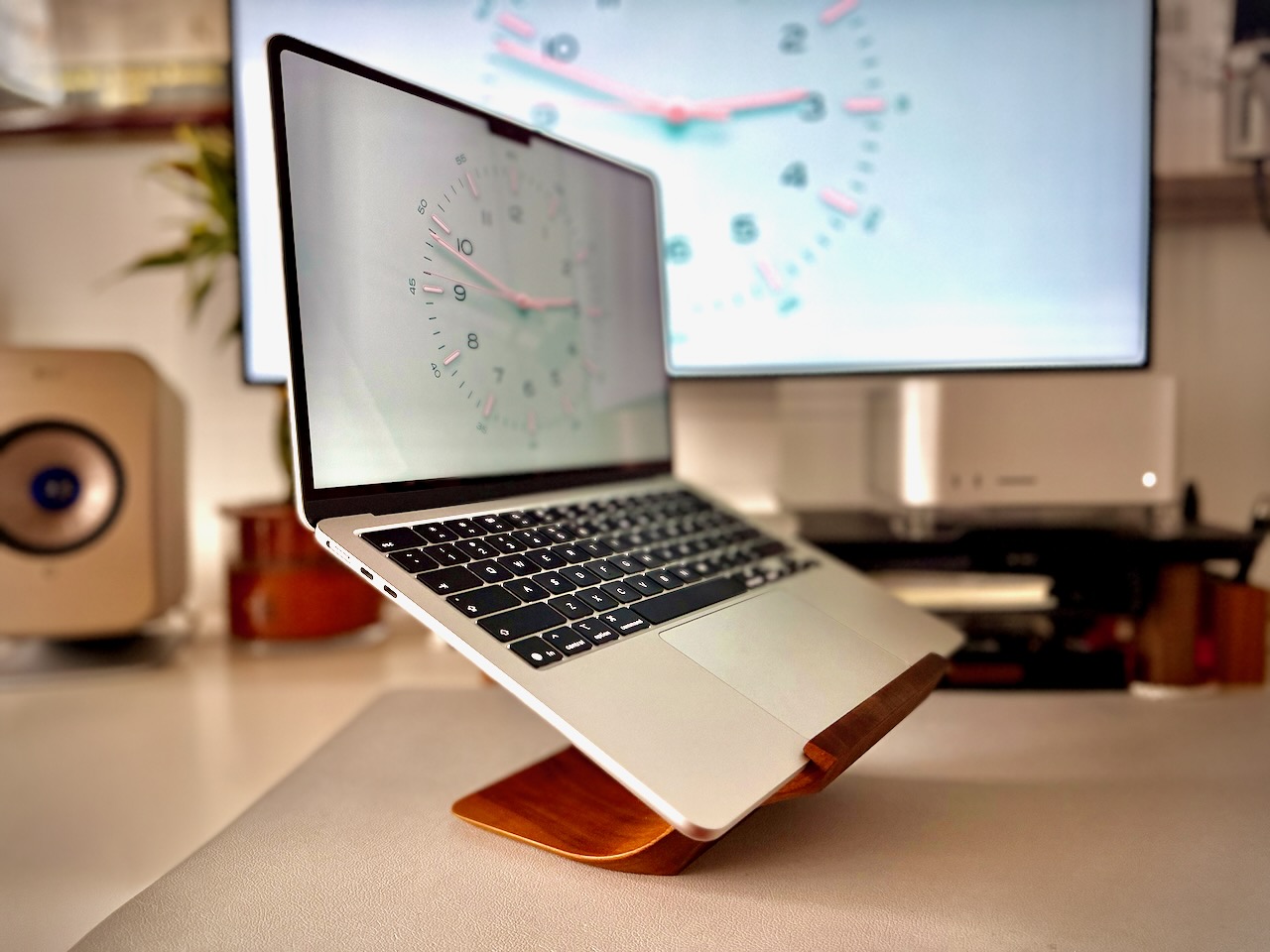
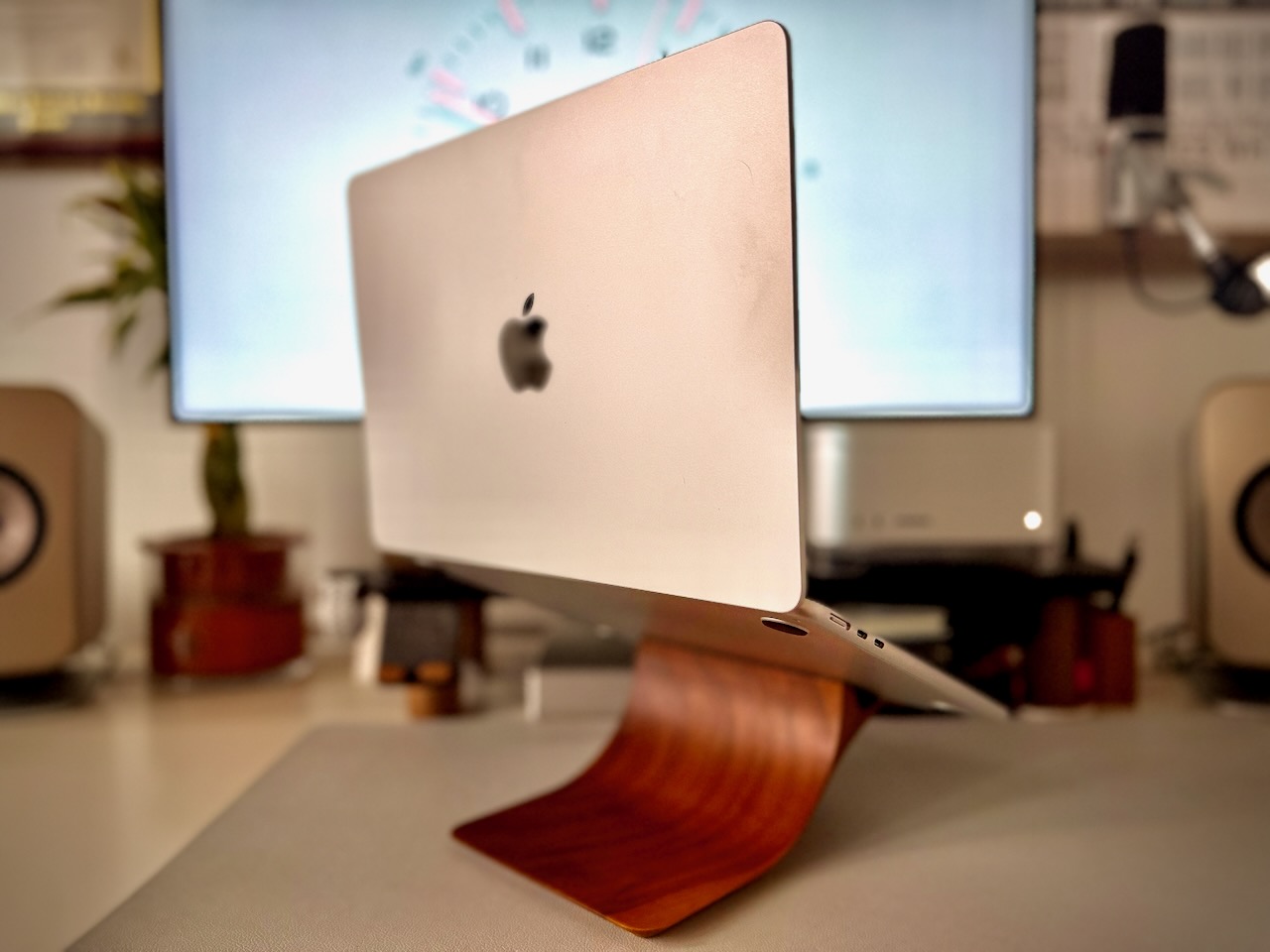
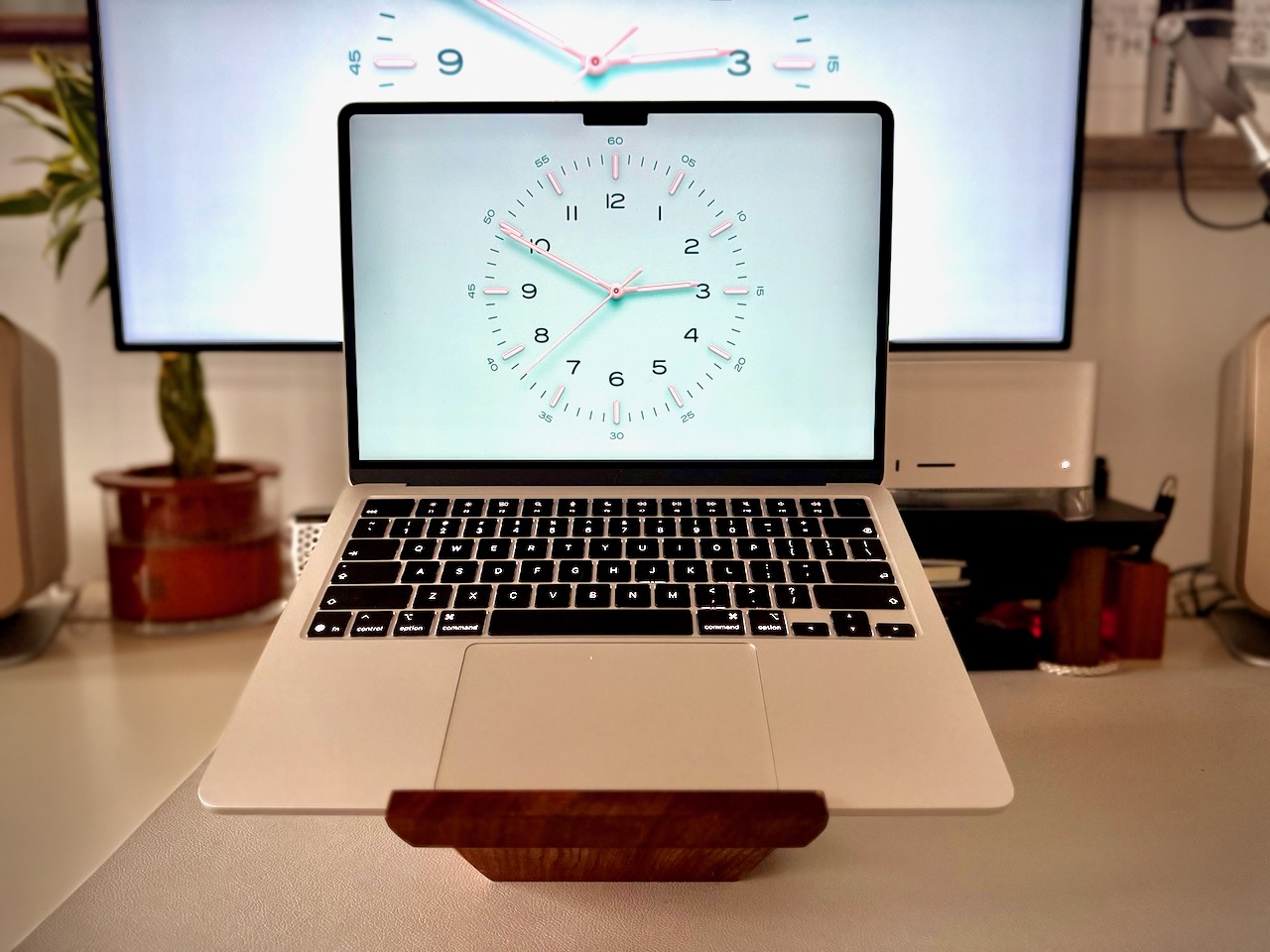
I was looking for a minimalist, well-designed, functional notebook stand, which sounds like a small thing until you realize how many of them get at least one of those three wrong.
Most stands are functional and ugly. Or clean-looking and flimsy. Or “designed” in the way desk accessories become designed when they start trying too hard to prove they belong next to Apple hardware. I did not want a stand that only solved storage. I wanted one that looked intentional on the desk, worked without fuss, and did not turn the setup colder in the process.
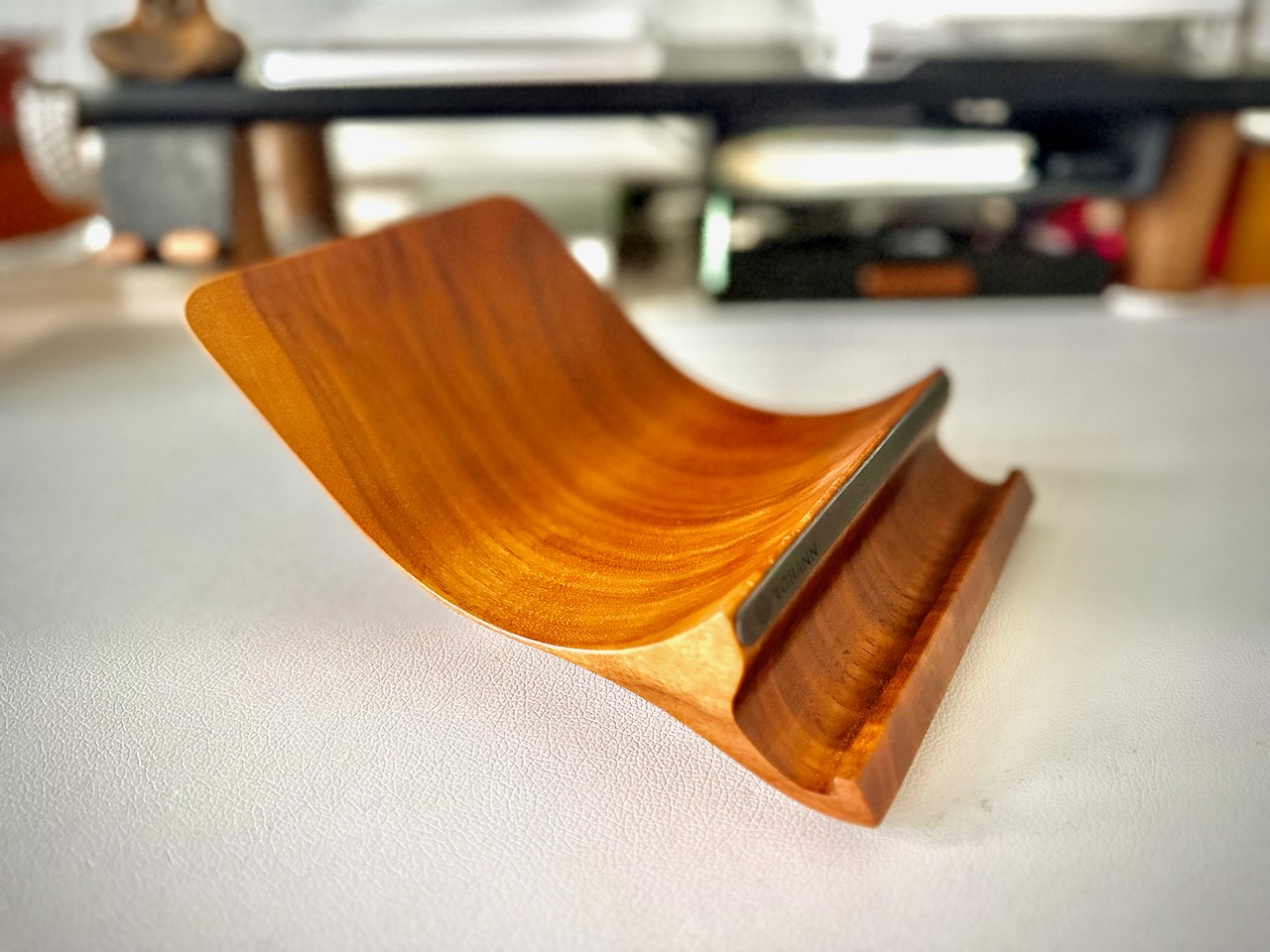
That is what pulled me to the Yohann MacBook Stand Wood.
On paper, it is a simple object. A place to dock a MacBook vertically, clear space, and keep the desk from looking like a laptop got set down there temporarily and never properly integrated. In practice, that is exactly why a stand like this matters. It decides whether the notebook feels placed or parked.
The first thing the Yohann stand gets right is material.
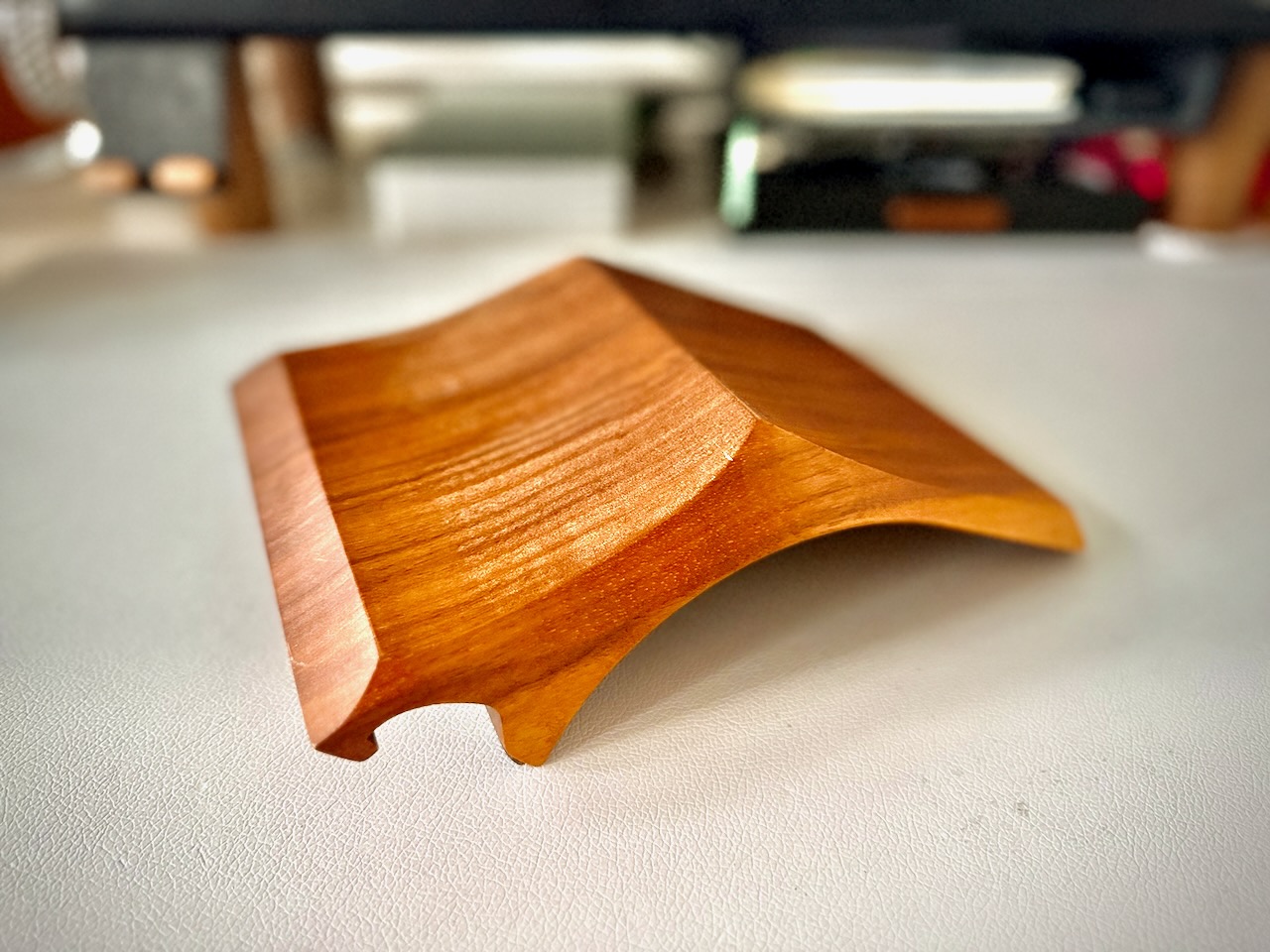
Most notebook stands live in the usual world of aluminum, plastic, or steel. All functional. All predictable. Most of them do the job while making the desk feel slightly more technical, slightly more temporary, slightly more assembled. The wood changes that immediately. It brings warmth into a category that usually defaults to cold competence. A setup is not only a collection of efficient decisions. It is a visual environment you sit inside for hours. The wrong accessory can make even a clean desk feel harder, more mechanical, more like a workstation trying to prove itself. The right one can pull things back toward furniture, toward objects that feel chosen instead of accumulated. That is the first win here. It looks intentional. And it does not get there by trying too hard. The Yohann stand does not perform design. It does not lean on wood as a personality trait. It does not try to turn a notebook dock into a sculpture. The shape stays restrained, the proportions feel clean, and the material does the work.
Then there is the practical side, which is the reason it survives beyond first impression.
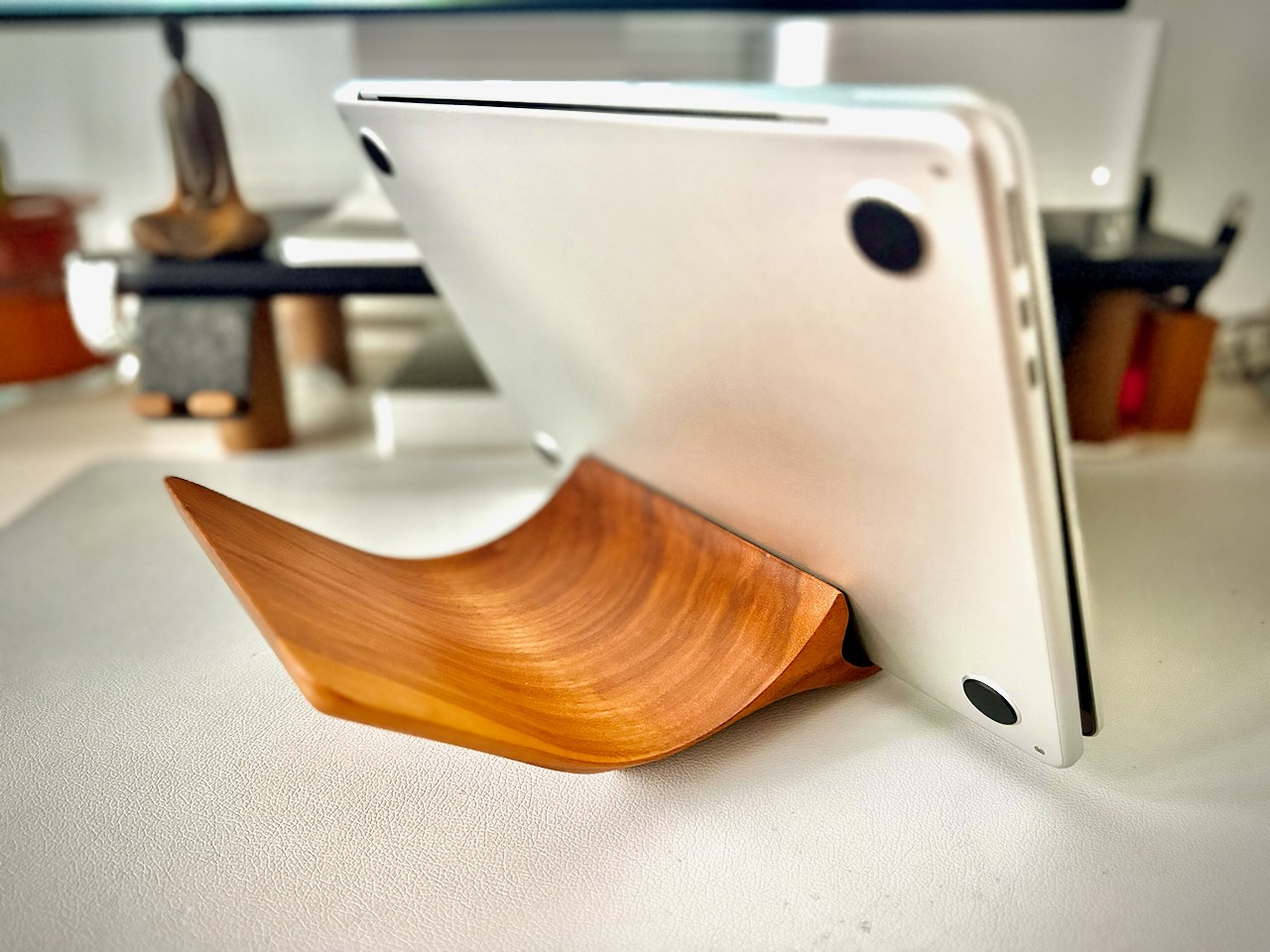
A vertical stand only works if it removes friction instead of adding ritual. The notebook has to slide in cleanly. It has to stay secure without making you feel like you are docking expensive hardware into a trap. It has to support the machine firmly enough that the whole thing feels settled. And it has to do this without turning every insert and removal into a tiny annoyance.
That is where a lot of stands fail. Not dramatically. Quietly. Slightly awkward fit. Slightly too much pressure. Slightly too much care required. Enough to make the object feel less solved than it looked in the product photos.
The Yohann stand avoids most of that by feeling calm in use.
That is the word I keep coming back to. Calm. Slide the MacBook in, it sits the way it should. Pull it out, nothing about the interaction feels tense or fiddly. It does not demand ceremony. It only does its job.
That matters because a stand like this lives in repetition. You do not judge it once. You judge it every day.
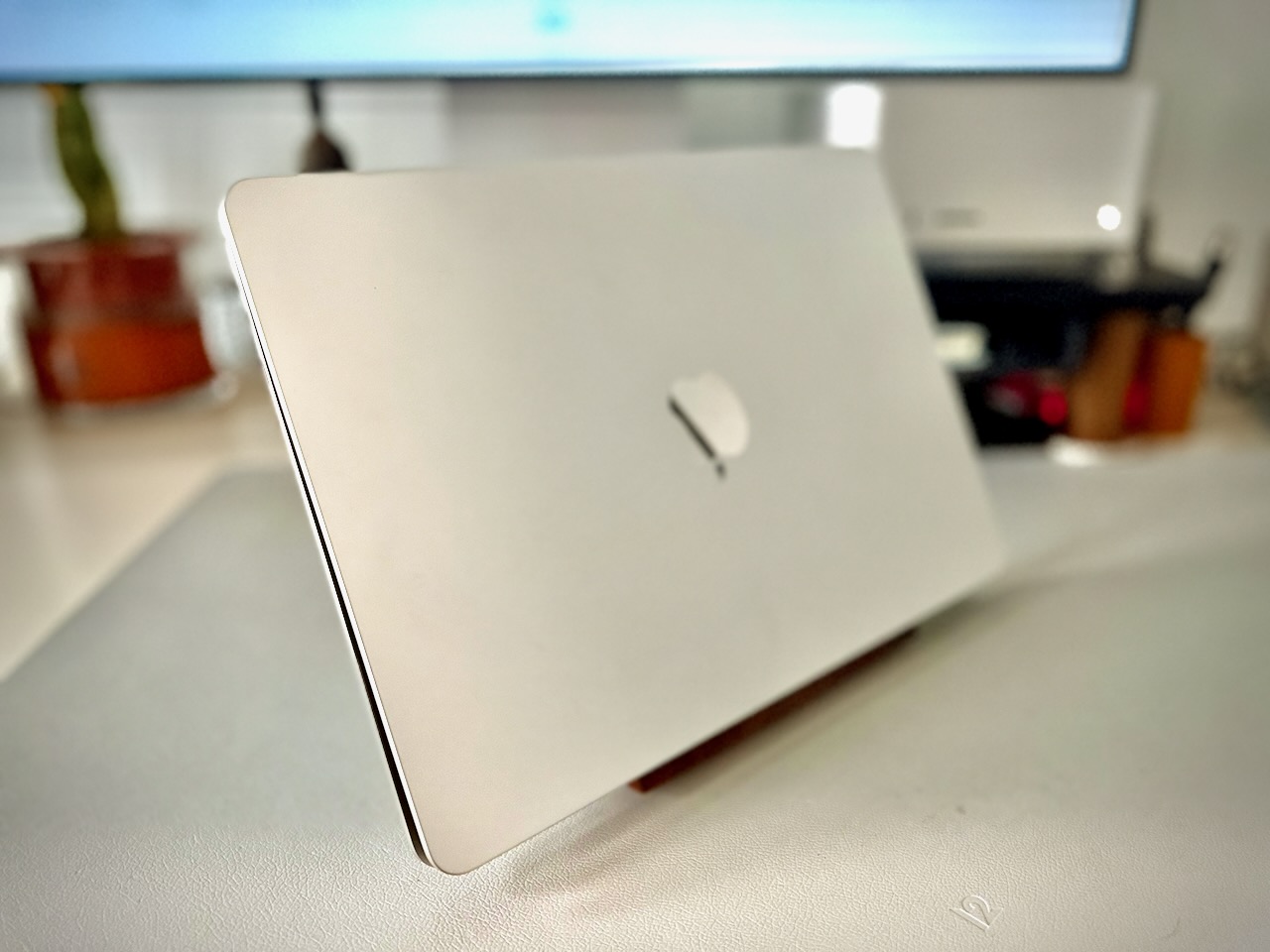
The second practical win is spatial. A vertical notebook stand gives the desk back to itself. That sounds small until you stop letting a closed laptop sprawl across the surface like a placeholder for future work. Once the MacBook is docked cleanly off to the side, the desk stops feeling like it is in between states. It feels set. Keyboard where it belongs. Display where it belongs. Laptop present, but no longer dominating the surface.
The Yohann stand helps that shift because it turns storage into part of the composition instead of an afterthought.
And because it is wood, that composition softens.
That is the difference from metal stands that disappear by becoming neutral. The Yohann stand disappears by making the desk feel more complete. It adds a little warmth, a little texture, a little relief from the endless language of anodized aluminum and black accessories. Next to a MacBook, it creates contrast without conflict. Apple hardware can sometimes make a desk feel too perfectly machined. The wood stand gives the setup somewhere to breathe.
That contrast is the whole appeal.
None of this means it is beyond criticism.
A wood stand is never going to be the most invisible answer. If your desk is built entirely around industrial consistency, matching metals, and zero material contrast, this may read as a deliberate interruption. It has more personality than the average notebook dock, which is either the point or the drawback depending on what you want. And like any object that leans on material quality, it only works if the finish, grain, and construction are actually good. A bad wooden accessory looks worse than a generic metal one because there is nowhere for the quality to hide.
You are paying for more than the laptop standing upright. You are paying for utility without visual penalty. For material that adds something to the desk instead of subtracting from it. For an object that solves a problem without making the setup uglier. Easy to dismiss if function is the only metric. Harder to dismiss if resolution matters.
That was the real case for me.
I wanted the notebook to have a place that looked deliberate, worked every time, and did not drag the desk back toward generic office gear. The Yohann MacBook Stand Wood does exactly that. It clears space, holds the machine properly, and adds warmth to a category that usually settles for cold competence.
That is why it works.
Not because it is trying to reinvent the category. Because it understands the assignment better than most of the category does. Hold the notebook. Clean the desk. Match the room. Stay quiet.
The Yohann MacBook Stand Wood is one of those small objects that makes a setup feel more finished than its size should allow. Utility, but with taste.