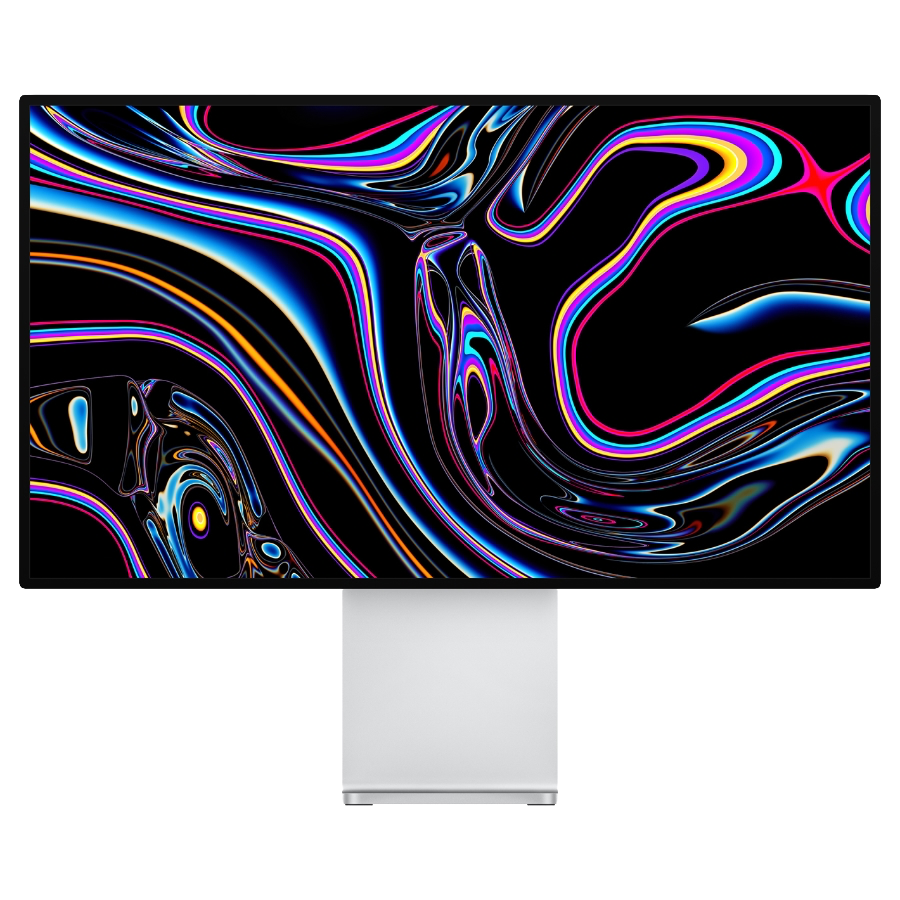
I was patient for longer than I should have been waiting for Apple to release a new display. The old Thunderbolt Display was getting long in the tooth, and while there were plenty of newer options on the market, most of them lost me on sight. Good panels, strong specs, endless forum approval, and the same plastic-heavy industrial-design-nowhere feeling that makes so many monitors look temporary. I did not want a piece of plastic junk parked at the center of my desk, no matter how good the spec sheet looked.
That was the problem. A display is not background furniture. It is the thing you look at all day. It sets the tone for the whole setup. If it looks cheap, overly technical, or vaguely disposable, the rest of the desk starts leaning that way too.
That is why the Pro Display XDR made sense to me long before it made sense on paper.
I wanted a display that could disappear as a variable. Something sharp enough, stable enough, and consistent enough that I was not second-guessing text, color, brightness, scaling, or panel weirdness every time I sat down to work. Most displays are good until you live with them for hours. Then the compromises start showing up. Color drifts a little. Brightness feels uneven. Text never quite settles. The finish does something strange. You adapt, but you never fully stop adjusting.
The XDR ends that cycle.
The first thing it does is remove doubt. Color looks trustworthy. Whites look clean without feeling cold. Gradients stay smooth. Contrast has weight. Text looks carved into the panel instead of laid on top of it. That part matters more than display reviews usually admit. You do not only look at photos or video all day. You look at words. Menus. Windows. Notes. Browser tabs. A display this sharp changes the feel of all of it. The whole system looks tighter.
That is what separates the XDR from a lot of expensive monitors that are still, at the end of the day, monitors. This feels more like an endpoint. Not because nothing else exists, but because the usual excuses disappear. Brightness. Consistency. Build. Scaling. Finish. Industrial design. It all lines up in a way that makes lesser displays feel like stacks of tradeoffs.
The consistency is a huge part of the appeal. A lot of displays can impress you in the first hour. Fewer stay convincing after long workdays, shifting light, different content, and months of use. The XDR holds its line. It looks the way it is supposed to look every time I sit down. That reliability is what makes it feel premium. Not the aluminum. Not the branding. The consistency.
It also avoids a problem a lot of high-end displays have. They want to be admired. The XDR is obviously striking, but the better quality is that it stops calling attention to itself once the work starts. It becomes the anchor of the setup. Calm. Exact. Quiet in the right way.
That matters even more next to a Mac desktop. Paired with Mac Studio, the whole thing feels like one instrument instead of separate components negotiating with each other. Everything feels tighter. Cleaner. More native. Mixed-brand setups can work perfectly well. Few feel this resolved.
None of this makes it sane.
The price is absurd. The stand situation was absurd. Apple priced certainty like a luxury good because that is exactly what it is. There is no honest way around that. The Pro Display XDR sits in the category where value stops being the point.
That is also why it is not easy to recommend broadly. Most people do not need this display. Plenty of people who want this display do not need it either. There are cheaper monitors that do the job well. Some are smarter buys. If your work does not benefit from extreme panel quality, stable color, brightness headroom, and tight Apple integration, the XDR is overreach.
But that was never the question for me.
I did not buy the Pro Display XDR because it was rational. I bought it because I wanted the screen equivalent of boring confidence. No panel drama. No visual second-guessing. No sense that the display was the weak link in an otherwise resolved setup. I wanted something that could carry long workdays, text-heavy work, photo work, video, and general desktop life without ever feeling like the compromise in the room.
That is exactly what it does.
The Pro Display XDR is expensive in the way Apple products are expensive when they stop pretending price is part of the conversation. It is overbuilt, overkill for most people, and still one of the few displays that makes more sense the longer you live with it.
It does not ask for attention. It removes doubt.
Paired with Mac Studio, the whole setup stops feeling like a desk with components on it and starts feeling like one continuous tool. That is the payoff. Not excitement. Not novelty. Visual confidence with zero friction.