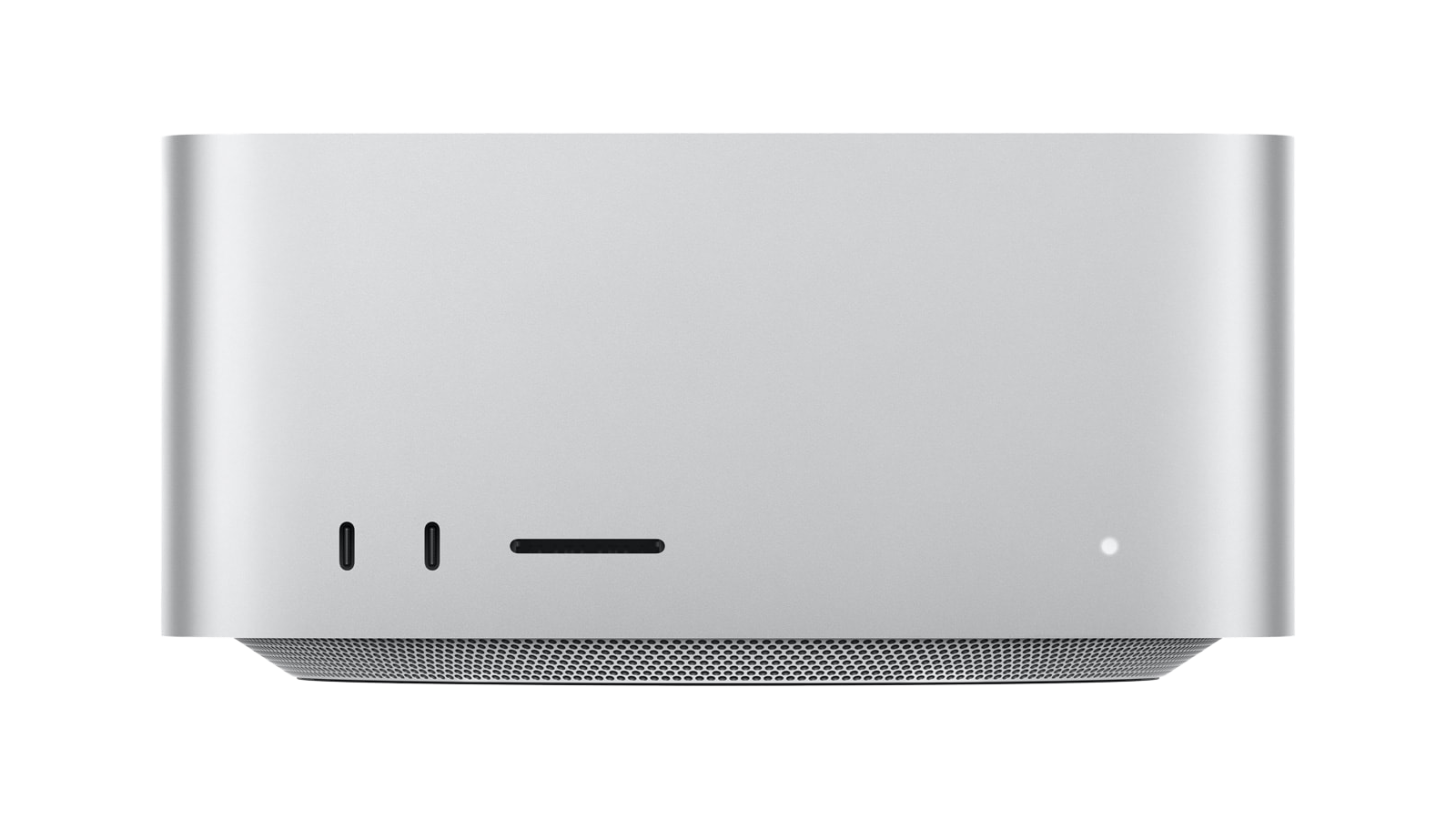
When Apple announced the move to Apple Silicon, I was interested for the same reason everyone else was. Performance per watt, unified memory, the usual list. But I was not in a rush. My Intel Mac Pro was still doing the job, even if it increasingly felt like the last survivor of a different Apple era. Big chassis. Xeon logic. Upgrade-story mythology. A machine built around the old idea that professional meant large, hot, modular, and vaguely theatrical.
I knew I was not buying the first wave.
I waited for the platform to mature, and more specifically, I waited for the M2 Ultra. That felt like the point where Apple Silicon stopped being impressive for a small machine and started becoming a serious replacement for the old workstation logic. I did not need a laptop pretending to be a desktop. I wanted the desktop.
That is what Mac Studio became.
What sold me was not novelty. It was compression. Mac Studio with M2 Ultra takes a category of machine that used to demand size, heat, noise, and spatial negotiation and reduces it to something that can sit quietly on a desk without feeling compromised. That is the part that still feels slightly absurd. You get workstation-class headroom in something that does not dominate the room, does not beg for thermal sympathy, and does not make its own existence part of the workday.
That is the difference from the Intel Mac Pro. The old machine felt like infrastructure. Powerful, yes, but always present. It occupied the room physically and psychologically. The Studio does the opposite. It disappears. Not because it is weak or limited, but because it is so composed that it rarely gives you anything to think about.
That composure is the real luxury.
Performance is obviously part of the story, but the more important part is how boring the speed becomes. Apps open instantly. Heavy multitasking stops feeling heavy. Large files, exports, layered workflows, browser tabs gone feral, media work running beside everything else, it all stays inside the machine’s comfort zone. There is no sense of negotiating with it. No little pause where you wonder if you asked too much. No background drama. It simply holds the load.
And it does that without turning into a fan event.
That still matters more than benchmark culture likes to admit. Plenty of powerful desktops can brute-force their way through work. Fewer do it while staying quiet enough that you stop remembering the machine is there. The Mac Studio M2 Ultra has that quality. It keeps its head down. No thermal panic. No acoustic punishment. No feeling that performance is being rented from a cooling system.
That changes the mood of a setup more than people think. A noisy machine keeps reintroducing itself. A hot machine asks for accommodation. A large machine organizes the room around its mass. The Studio avoids all of that. It gives you serious desktop power without dragging workstation energy into the room.
The size is a big part of why it works. Mac Studio is compact in the way Apple products are compact when they are trying to make old categories look faintly primitive. Set next to what it replaces, the whole shift is hard to ignore. Years of professional desktop design assumed that power needed volume. Then Apple turned that assumption into a small aluminum block and moved on.
That alone would not matter if daily use felt compromised, but it doesn’t. The ports are where they should be. The footprint is small enough to disappear. The build feels dense, quiet, and resolved. It behaves like a finished object, not a provisional box waiting for a future revision to fix the compromises.
There is also something satisfying about what it says about Apple’s current desktop philosophy. The old Mac Pro was about expandability as identity. The Studio is about integration as confidence. That trade will bother people who still want internal cards, big chassis access, and the old form of control. Fair enough. But for the kind of work I do, I would take this kind of solved machine over legacy modular romance every time.
That does not mean it is above criticism.
Mac Studio is expensive, especially once you start climbing the memory and storage ladder the way Apple clearly hopes you will. Apple Silicon’s strengths are real, but Apple’s pricing discipline remains exactly what it has always been, which is to say ruthless. And while the Studio is more than enough machine for most people, that is also what makes it easy to overspend on. Plenty of buyers will end up paying for headroom they admire more than they use.
That is the usual Apple tax at this level. You are not only paying for speed. You are paying for density, silence, industrial design, platform integration, and the privilege of having fewer moving parts in your mental model of the setup. None of that is cheap.
Still, this is one of those products where the value shows up in the absence of friction. The machine does not demand attention. It does not need management. It does not make you think about thermals, noise, desk placement, or whether today is the day the system decides to feel old. It sits there, does the work, and refuses to become a topic.
That is exactly what I wanted from the replacement.
I waited for Apple Silicon to become the desktop I was actually willing to buy. The Mac Studio M2 Ultra was that machine. It gave me the performance jump I wanted, the calm I did not have before, and a form factor that finally made the old workstation formula feel excessive.
Mac Studio is not exciting in the loud way. It is exciting in the rarer way. It makes an enormous amount of power feel settled.
That is the payoff. Not spectacle. Not fanfare. Calm headroom.