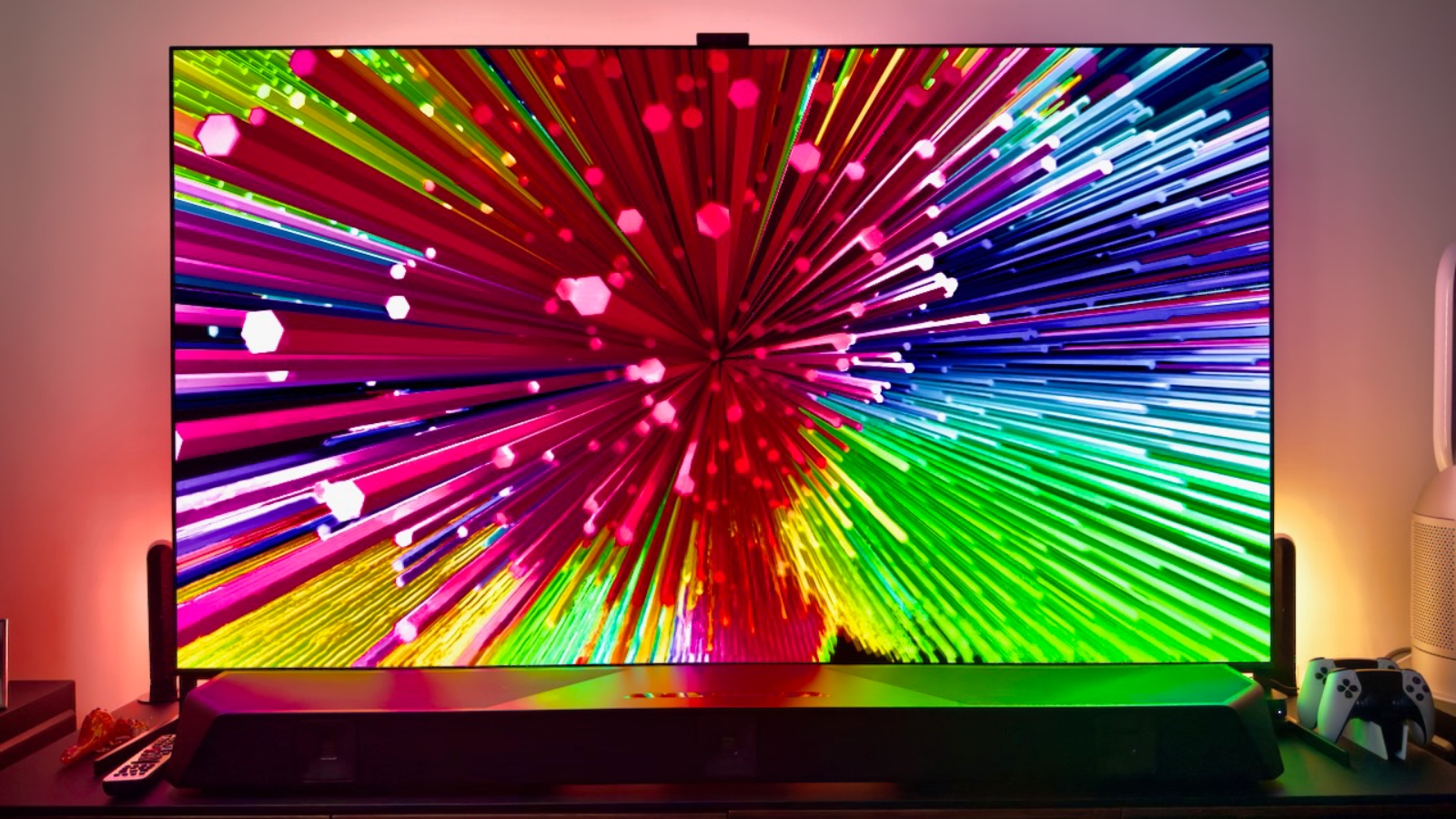
I went deep on Philips Hue because most smart lighting falls apart the second you try to make it feel like a system instead of a gimmick. Hue is the one that didn’t.
My setup is not small. Bridge Pro. Play HDMI Sync Box 8K. Gradient Lightstrip 75". Play Wall Washer. Plenty of other Hue lights across the house. Enough to see where the ecosystem earns its reputation and where it charges for it.
Philips Hue costs too much and still ends up ahead.
It also fits cleanly into a bigger smart home. Apple Home support through the Bridge is solid, and Matter support makes Hue easier to fold into a broader setup without feeling pinned to one app or one assistant. That flexibility matters more as the system grows.
It does not feel like a pile of RGB products pretending to be a home system. It feels architectural. Rooms stay clean. Zones stay where you put them. Scenes build fast. Automations hold. The whole thing feels like lighting first, smart home second.
The Bridge is why. It is not exciting. It is the adult in the room. Once you move beyond a handful of bulbs, that matters. Response times stay quick. Schedules hold. The system does not start acting flaky the second you ask more from it. That is where cheaper brands usually expose themselves. They demo well. They do not scale well. Hue does.
The Play HDMI Sync Box 8K is where Hue becomes either brilliant or ridiculous. When it is working, fast cuts, muzzle flashes, neon city scenes, menu screens, all of it spills past the edges of the TV and into the room. Games benefit most. The setup feels wider, more alive, more reactive. Done well, it adds atmosphere without making the room look like an arcade. The 8K version also makes sense with current consoles and newer home theater gear.
The downside is obvious. More hardware. More cables. Another box in the chain. Another place for HDMI handshakes and source switching to get temperamental. Hue did not invent that problem, but it does charge premium money to let you live with it. The Sync Box is impressive, polished, and still not invisible.
The Gradient Lightstrip 75" is one of the best products in the lineup. On paper, it is an expensive TV lightstrip. In use, it earns more than that. The color moves cleanly across the back of the screen. The glow lands softly on the wall instead of breaking into cheap-looking bands. With Sync working properly, it stops feeling like an accessory and starts feeling built into the room. A lot of TV lighting looks thin and synthetic. This doesn’t.
The Play Wall Washer is easy to underrate until you live with it. Backlighting alone can feel flat. The Wall Washer throws light into the room instead of only tracing the screen. The setup gains depth. It feels more deliberate, less like a tech demo.
One Hue bulb is a smart bulb. A full Hue setup starts to feel like part of the room itself. Clean white light when you want function. Warmer scenes when you want the room to slow down. Media sync when you want the space to react. It handles practical lighting and mood lighting without feeling split between different systems.
Color quality is better than most cheaper alternatives. Whites look cleaner. Dimming feels smoother. Colors have more weight and less plastic in them. Budget lights can look fine on their own. Spread them across a room or a house and the compromises show up fast. Hue usually holds its shape.
The app helps because it is boring in the correct way. Organized. Mature. Stable. You can build scenes, group zones, manage accessories, and set automations without feeling like you are babysitting unstable software.
Now the part that needs to be said clearly. Hue is overpriced.
Not a little. Overpriced.
The problem is not one bulb. It is the ecosystem math. Bridge, sync hardware, lightstrips, accent fixtures, switches, sensors, expansion. It adds up fast, and Hue knows exactly what it is doing. The system is good enough that once you buy in, you want consistency everywhere. That consistency gets expensive fast.
Setup is also less effortless than the branding suggests. Hue likes to look elegant and easy. A serious setup is neither difficult nor frictionless. Placement matters. Entertainment areas matter. HDMI behavior matters. Calibration matters. If you care enough to buy the premium system, you are also signing up to tune it.
For plenty of people, Hue is complete overkill. If all you want is a bulb that turns on from your phone, there are cheaper ways to do that. Hue starts making sense when light is part of how you shape a room, not only how you light it.
I stay with Hue because, when it is done right, it feels less like smart home tech and more like control over atmosphere. The Bridge gives it backbone. The Sync Box and Gradient Lightstrip make a TV setup feel larger than the screen. The Wall Washer adds dimension. The rest is stable enough that it does not feel like a science project.
Philips Hue is not the value pick. It is the benchmark.