I hung onto hope longer than I should have that Apple would update the Airport Extreme. It never happened. At a certain point, nostalgia stopped being a strategy and started being bad networking. The Airport had the usual Apple strengths. Clean design. Low drama. Set-it-and-forget-it energy from the era before every hardware company decided it also needed to become a software company. But time caught up. Faster internet. More devices. More streaming. More work happening at home. More dead spots you start routing your life around without admitting it. I needed to move into the next century of Wi-Fi.
What I wanted was not a hobby. I did not want to build a networking personality. I did not want a rack-adjacent aesthetic, a Reddit certification, or an afternoon spent pretending DHCP settings were a meaningful use of my life. I wanted what the Airport used to give me, updated for the present. Strong coverage. Stable performance. Clean setup. Low overhead. Something that could live in the house without turning into infrastructure cosplay.
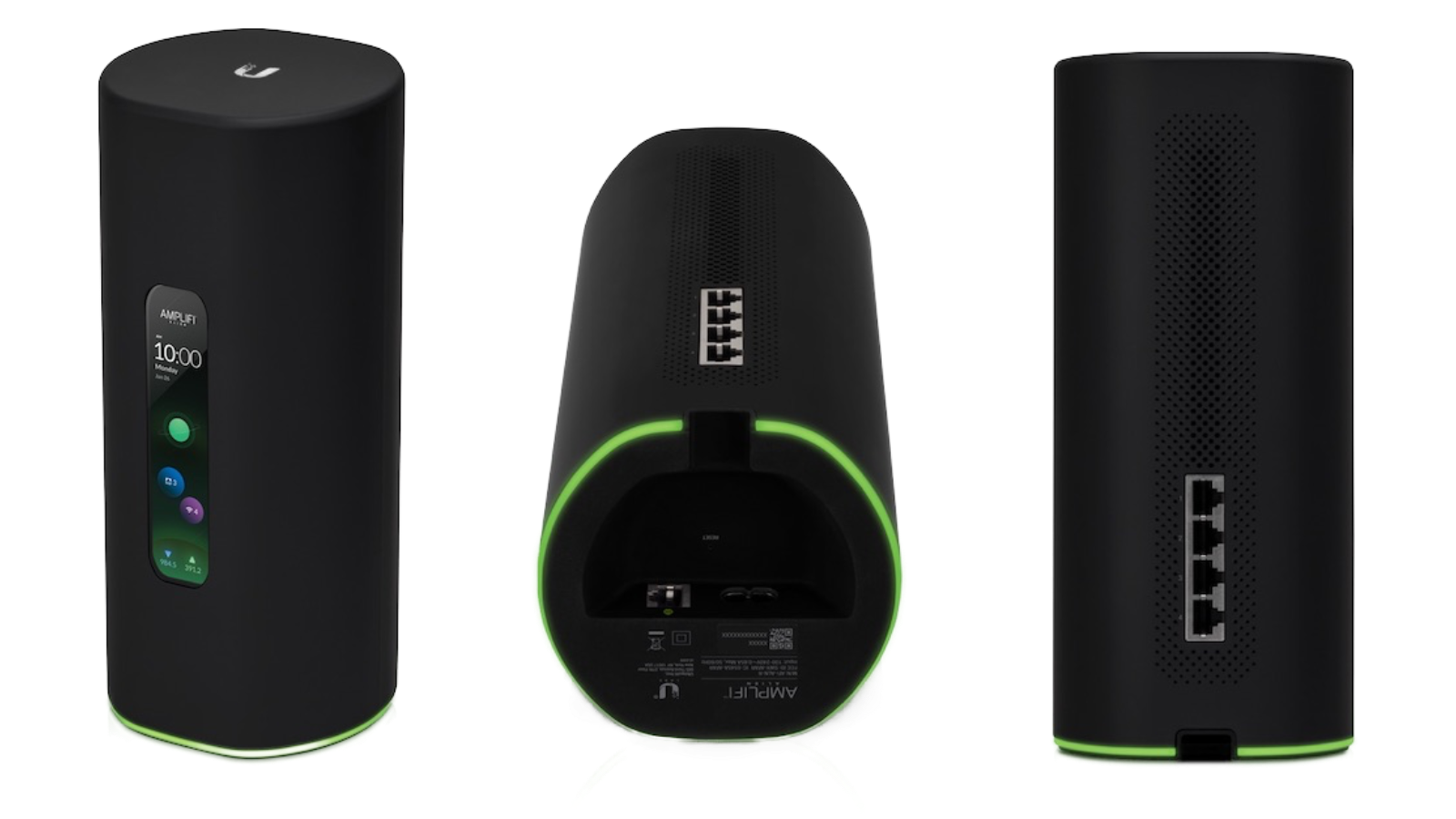
Most networking gear still makes you choose between ugly competence and friendly compromise. The serious stuff looks like it belongs in a server closet or under a gaming desk glowing for no reason. The simpler consumer gear swings the other way and treats basic curiosity like advanced networking. The Alien sidestepped both. It looked like someone understood this thing might have to live in the open. It felt like a product, not a warning label with antennas.
That mattered more than I expected. Routers do not disappear. They end up on shelves, consoles, sideboards, and corners where every bad industrial design decision stays visible. The Alien at least looked intentional. Not invisible. Not subtle exactly. But deliberate enough that I did not resent having to look at it every day.
The more important part was that it behaved the way a home network product should. Setup was fast. The app made sense. Coverage was strong. Throughput stayed steady. Roaming stopped being something I noticed because it stopped failing loudly. The whole system felt like it had one job and understood it.
That is the part a lot of networking gear misses. It can be technically capable and still feel annoying. Too many settings. Too much jargon. Too much checking whether the thing is behaving instead of living as though it is. The Alien got closer to the old Airport ideal than most modern routers do. Not because it copied Apple’s design language, but because it respected the same rule. Networking should not turn into a relationship.
The app is a big reason it works. It is fast, clear, and readable without talking down to you. You can see what is connected, what the network is doing, and whether the problem is actually the router before you start blaming your laptop, your ISP, or the room itself. That sounds small until you live with bad networking software. Then you realize how rare it is for the companion app to lower your blood pressure instead of raising it.
The screen on the router sounds gimmicky until you live with it. Then it becomes one of those small useful things you miss the second it is gone. Not because it transforms anything. Because it gives you a quick read without adding another layer between you and the answer. Status. Speed. Sanity check. Glance, confirm, move on. It earns its place.
Performance was what finally made me stop missing the Airport. The Alien gave me the version of home Wi-Fi I wanted years earlier. Better range. Better throughput. Better stability. Less of that low-grade unpredictability that teaches you dumb little rituals around your own house. Standing in the same corner for a call. Resetting something before guests come over. Avoiding one room because it is where the signal goes to die. The network stopped being something I worked around.
That is the real upgrade. Not the headline speed. The disappearance of workaround behavior.
That matters even more when the house stops being only a house. Work, video calls, streaming, uploads in the background, phones bouncing around, tablets everywhere, smart home junk quietly multiplying, the whole pile. The Alien handled that shift without making me feel like I had accidentally become the household IT department. It brought the network up to date without asking me to start managing one for fun.
That does not mean it is perfect.
The Alien is opinionated. If you want endless knobs, deep custom control, and the ability to tune every last corner of the network, this is not your machine. There are better options for people who want their router to double as a project. And while the design is better than most, it still takes up space. This is not a tiny white puck fading into the background. It wants a spot, and you will notice it.
It is also priced like a peace-of-mind product, which is exactly what it is. You are paying for more than signal strength. You are paying for the reduction in hassle. The hardware. The app. The setup. The visibility. The fact that it does not immediately push you toward a troubleshooting forum. That convenience is part of the bill.
The AmpliFi Alien is not the router for people who want to spend weekends tuning a network diagram. It is the router for people who want modern Wi-Fi that works, looks decent in the house, and stays out of the way once it is set. In other words, it solved the exact problem Apple left behind when it abandoned the Airport line.
I was not looking for the most advanced router. I was looking for the cleanest exit from an old Apple network setup into the current century. The Alien gave me that. Strong Wi-Fi. Sane software. Better visibility. None of the performative complexity that makes so much networking gear feel like homework.
That is the payoff. Not router enthusiasm. Relief.